
Coffee Culture in Croatia with Kids
Croatia essentially inherited two coffee traditions at once: the public, social café culture from Vienna, and the private, hospitality-driven ritual from the Ottoman world.
Both still coexist today; one plays out on sunny terraces, the other around a kitchen table.
What “going for a coffee” Really Means in Croatia
Here’s something that might surprise you: sometimes we ask each other, “are you free for a coffee this afternoon?” and both sides already know they’re not actually going to drink coffee at that hour, evem though they agree to meet.
So what that coffee really means in Croatia?
If you’ve ever visited Croatia, you’ve probably noticed the terraces are full at every part of the day; busy tables, people chatting, working, studying, always with a cup of something in front of them.
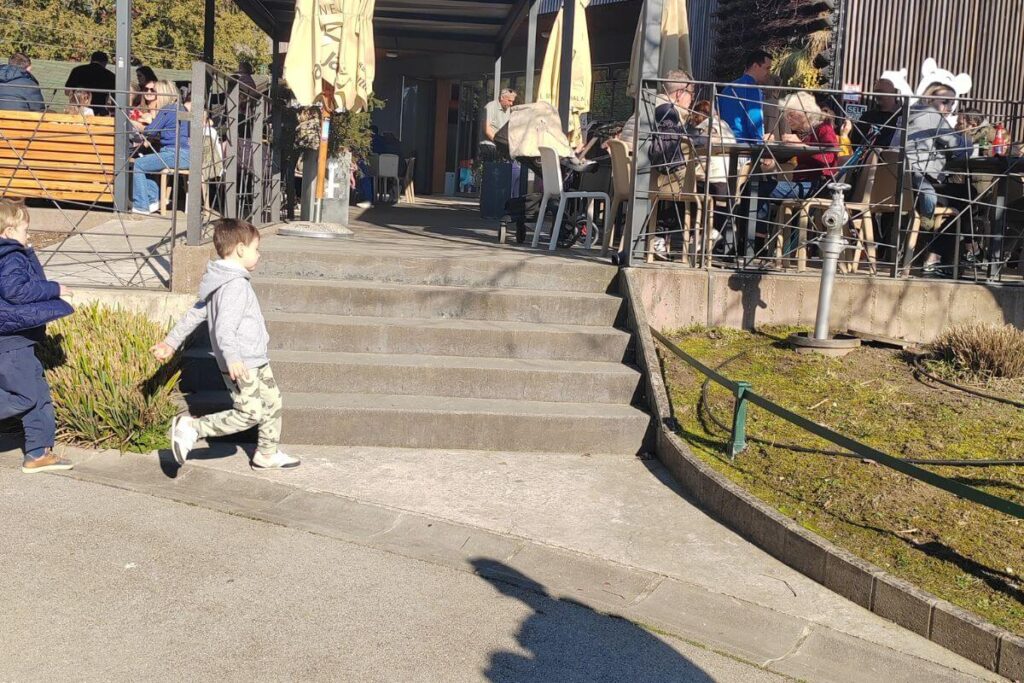
All of it counts as “going for a coffee.” If this is your first visit, it’s something you’ll see daily, everywhere you go.
Unlike cafés in some other countries, most cafés here serve only drinks; no menus, no kitchens, no snacks.
But that doesn’t make them a quick stop. Quite the opposite: proper furniture, real ceramic cups and glasses, nothing plastic, nothing to-go by default.
Some places have started adding cakes or sandwiches, but drinks-only is still the norm.
You can absolutely grab a coffee to go if you want one, but in Croatia, going for a coffee is so much more than actually drinking it.
Let me tell you about the time I found out the hard way, from the other side.
“Aren’t You Done?”- What My Italian Friend Didn’t Understand
Before I had kids, I’ve been walking and sightseeing Zagreb with my Italian friend. At some point I said we should go for a coffee.
Naturally, he was in. He’s Italian, after all, that speaks for itself.
We found a place with a gorgeous view, sat down, and ordered: espresso for him, coffee with milk (kava s mlijekom) for me.
The waiter brought our coffees, and before I’d even taken my first sip, my friend stood up.
I asked him if he was looking for the restroom.
He looked confused and said, “No, I’m done, aren’t you?”
I stared at him like he’d spoken another language. “Done? We literally just sat down.”
He was confused: “You said you wanted to go for a coffee. I drank my coffee. What else are we doing here?”
We ended up laughing about it for the rest of the day, once I explained that in Croatia, “idemo na kavu” was never really about the coffee, it was my way of saying let’s sit down, rest, and actually talk for an hour.
He pointed out that it’s literally called espresso. It means fast. Fair point. Just not in Croatia.
The Origins of Croatian Coffee Culture
Croatia’s coffee culture traces back to the Austro-Hungarian era, when the grand kavana (café) tradition traveled south from Vienna and took root here. The very first coffeehouse in Croatia opened in 1748, right on the main square in Zagreb, meaning this isn’t a new trend, it’s nearly three centuries of practiced leisure.
At the same time, Ottoman influence was shaping how coffee was made and consumed in a very different, more intimate setting.
Turkish-style coffee: thick, slow-brewed in a džezva (cooking pot) became the ritual reserved for home. Even today, if you visit someone’s house and they ask “jesi za kavu?” (are you in for a coffee?), there’s a good chance you’re getting this homemade version, not an espresso.
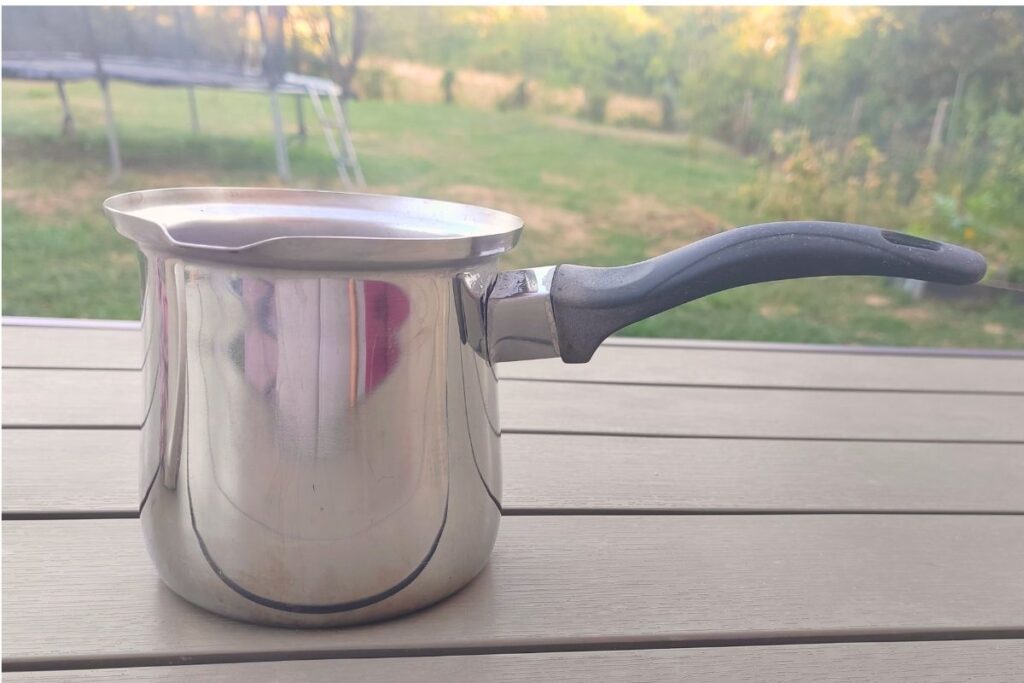
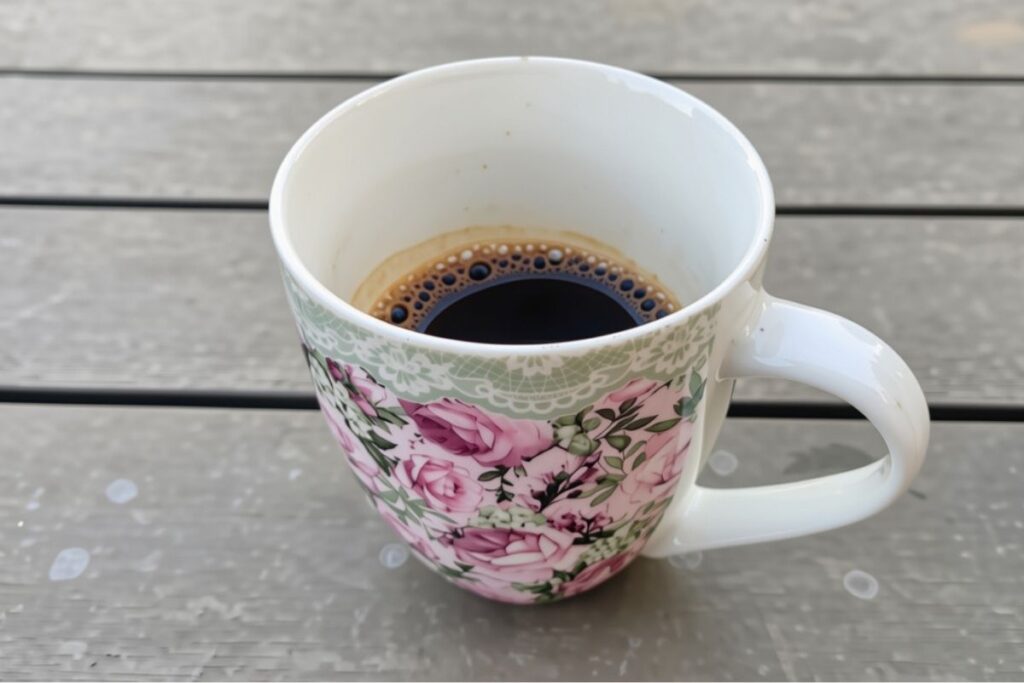
These days, of course, plenty of homes have modern espresso machines, and if you’re invited over, there’s a fair chance you’ll be asked whether you want a cappuccino, latte, or something fancier off a menu of buttons.
But for most regular people, the džezva-brewed coffee is still the way to go.
How Coffee Culture Shifts When You Have Kids
We’ve established that Croatians love their coffee rituals, hours of socializing with friends and family, no rush, no clock-watching. So how do you keep that alive once you have kids?
Honestly? It’s not easy, and every parent knows it. Like everything else in parenting, going for a coffee with kids takes some preparation and a healthy dose of realistic expectations.
There are ways to adjust and still carve out some quiet time with the people you love, but with babies and toddlers, keeping your expectations grounded is really the only way to prepare yourself properly.
Let me tell you a story. I was out with a friend who has two kids close in age to mine. Our older kids were 5-6 years old at the time and a babies around 10-12 months.
We had the perfect plan: a family-friendly café in Zagreb with a small park right next to it, early summer. The babies would nap in the stroller, the older kids would play in the park, and we’d finally get our coffee.
Guess what happened.
The change in routine meant the babies were exhausted but wouldn’t sleep; just tired and crying. The park was in full sun, so one of the older kids complained about the heat and refused to play, while the other complained her friend wouldn’t play with her.
Add in that I was hungry and both babies needed diaper changes, and our “relaxing coffee” turned into a small disaster.
Since we had the whole day ahead of us, we took a break, regrouped two hours later once the babies were finally asleep, and actually had a great time.
The lesson: knowing your kids and keeping your mindset realistic will probably still get you that coffee, eventually.
But every parent knows plans with young kids are just that, plans. They shift every five minutes. The goal isn’t to force the old ritual to work exactly like it used to; it’s to stay calm and adjust as you go.
So what actually helps?
Practical Tips for Visiting Cafes with Little Ones
Nowadays, kids in Croatia have plenty of options on the menu. The most popular picks are:

Healthier Option
If you want to keep it on the healthier side, go for the fresh-squeezed juice whenever it’s on the menu.
Terraces, strollers & space:
In Croatia, indoor smoking is prohibited by default in all restaurants and food venues. For drinks-only cafes, larger places usually have designated non-smoking areas indoors, but smaller neighborhood cafes are sometimes 100% smoking inside.
On outdoor terraces, smoking is generally allowed, but in practice, it’s rarely been an issue when sitting with kids. If you’re heading indoors, just ask for the non-smoking section.
A few things to look for when picking a spot with little ones:
- Ask for the non-smoking area if seating indoors
- Choose cafés with more open space– easier to manage strollers, high chairs, and moving toddlers
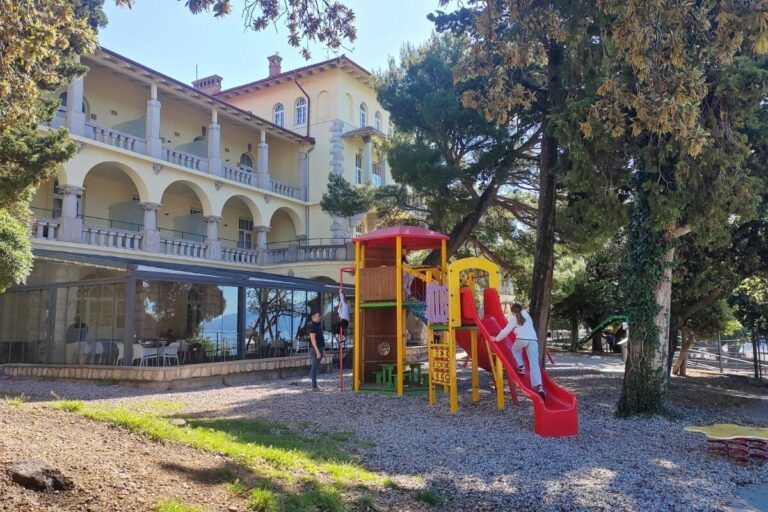
- If possible, look for a place with a playroom or a playground nearby– it makes a real difference on longer visits
- Ground-floor, terrace seating is usually your best bet for stroller access
Finding the Best Family-Friendly Cafes in Croatia
By now you know the ritual, but with kids, not every café is going to work for you, and that’s okay.
Across Croatia, more and more cafés are catering specifically to families: play corners, high chairs, terraces with room for strollers, or a location tucked right next to a park.
Whether you’re in Zagreb, relaxing on the coast in Split or Dubrovnik, or exploring Istria, finding a kid-friendly kava spot is always doable, you just need a local eye to point you in the right direction.
Starting your trip in the capital? Check out our complete guide to the best family-friendly cafes in Zagreb with play areas.
We’ll be covering more cities soon, so if you’re headed elsewhere in Croatia, keep an eye out for local guides to help you find your own perfect coffee spot with the kids.