
Traveling to Croatia with Kids: The Ultimate 2026 Family Croatia guide
Hi, and welcome to Cro Insiders! If you’re currently planning a family trip to Croatia and feeling information overload, you are in the right place.
When I was planning our first big family trip to Thailand, I spent weeks trying to piece together a picture of a country I had never seen. Different weather in different regions, temples that were two hours further than they looked on the map, no idea what was actually worth it with a toddler was overwhelming.
The experience of planning a trip to new country is exactly why I am writing this guide. Because Croatia, even though it is small (just under 4 million people, with roughly 800,000 of them living in Zagreb, the capital) has the same potential to overwhelm you if it is not presented in the right way.
The coastline alone runs through three distinct regions with totally different characters. There are mountains, wetlands, wine peninsulas, and medieval cities. Distances that look manageable on Google Maps turn into very different journeys when you are dealing with a winding road and a carsick six-year-old.
I am a mom of two, 6 years old 1 year old, and from that experience, I wanted to write a guide that’s not only a list of places you can already find on any travel site. It is the kind of information I wish I have when I research a country I don’t know. The honest and practical stuff, and the things that only make sense once you understand how Croatia actually works.
Let’s start at the beginning.
Planning a Family Trip to Croatia: What to Expect
Croatia sits at an interesting crossroads where Central Europe, the Mediterranean, and the Balkans all meet. We border Slovenia, Hungary, Serbia, Bosnia and Herzegovina, and Montenegro. We don’t share a land border with Italy, but we are separated only by the Adriatic Sea. Close enough that you can hop on an overnight ferry from Split or Dubrovnik and wake up in Bari or Ancona.
For a small country, the diversity is remarkable. In only few hours of driving you can go from the flat, fertile plains of the east, through dramatic mountains and waterfalls, and end your day watching the sun set over the Adriatic. Here is how I divide the country for planning purposes:
- Continental Center (Zagreb and surroundings): The heart of the country. Central European in its architecture and coffee culture, green, flat, and very manageable for families.
- Slavonia and Baranja (the East): The agricultural soul of Croatia. Flat river plains, legendary hospitality, and food that will ruin you for anywhere else.
- Lika and Gorski Kotar (the Mountains): The green, hilly transition between the interior and the coast. Plitvice Lakes is here. So are bears, waterfalls, and some of the most underrated hiking in the country.
- Croatia Coast Guide: From Istria to the Deep South with Kids The Croatia on the postcards. Blue water, white stone, red roofs. Three sub-regions that each deserve their own trip.
Important note :
Don’t try to see everything in one trip. It’s tempting when you look at the map and everything seems close. But for a child, a day that starts in Zagreb, passes through a mountain national park, and ends on the coast can become an overstimulation.
Zagreb: The Capital, the Entry Point, and a Destination in Its Own Right
Most international visitors fly into Zagreb, which makes it the natural starting point for any trip. But Zagreb is not just a transit center, it’s a city worth spending a few days in before you head anywhere else. It’s also relaxed and practical place for families.
Zagreb has a Central European character shaped by Austro-Hungarian architecture, a coffee culture, and lots of green space that is unusual for a capital city. It’s also one of only two cities in Croatia with a tram network, which makes moving around with children far easier than in most places along the coast.
The city is flat in its central areas, the parks are large and well maintained, and the pace is unhurried in a way that gives you time to orient yourself before the trip really begins.
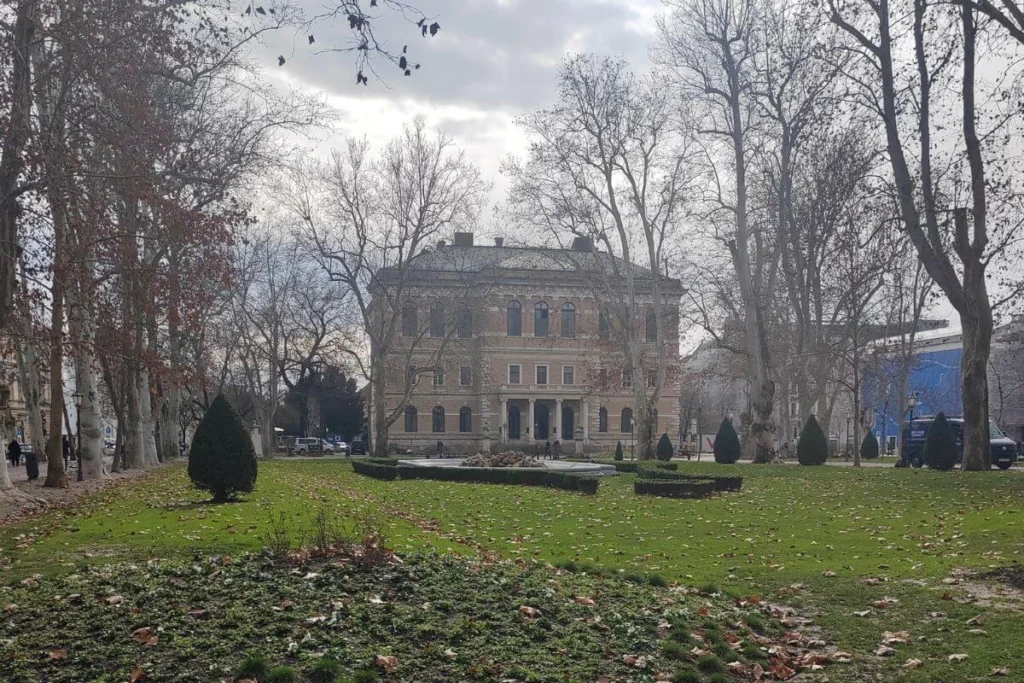
I have a dedicated guide to Zagreb that goes into much more detail. The best neighborhoods, how to navigate the blue trams with a stroller, where the parks are. But here are the best day trips from the capital, all within an hour or so of the city center.
The Best Day Trips from Zagreb for Families
Samobor
Half an hour west of Zagreb, Samobor is a pretty, flat town famous primarily for its kremšnita, a custard cream cake that locals are proud of and that you should absolutely eat when you’re there.
There is a castle ruin above the town, a pleasant market square, and in the nearby village of Rude, the Saint Barbara Mine: a former silver mine converted into a visitor attraction where you can take children underground through the old tunnels. It is the kind of experience that does not photograph particularly well but stays with children for years.
Karlovac and Aquatika
About 50 kilometers south of Zagreb, Karlovac sits at the four rivers and is home to Aquatika, a freshwater aquarium focused entirely on the fish and ecology of Croatian rivers and lakes. It is exactly the right size for families, large enough to be genuinely interesting, small enough that you are not managing exhausted children through endless halls. It works very well as a half-day stop, and it is also conveniently positioned if you are heading south toward Lika afterward.
Hrvatsko Zagorje: Castles and Thermal Spas
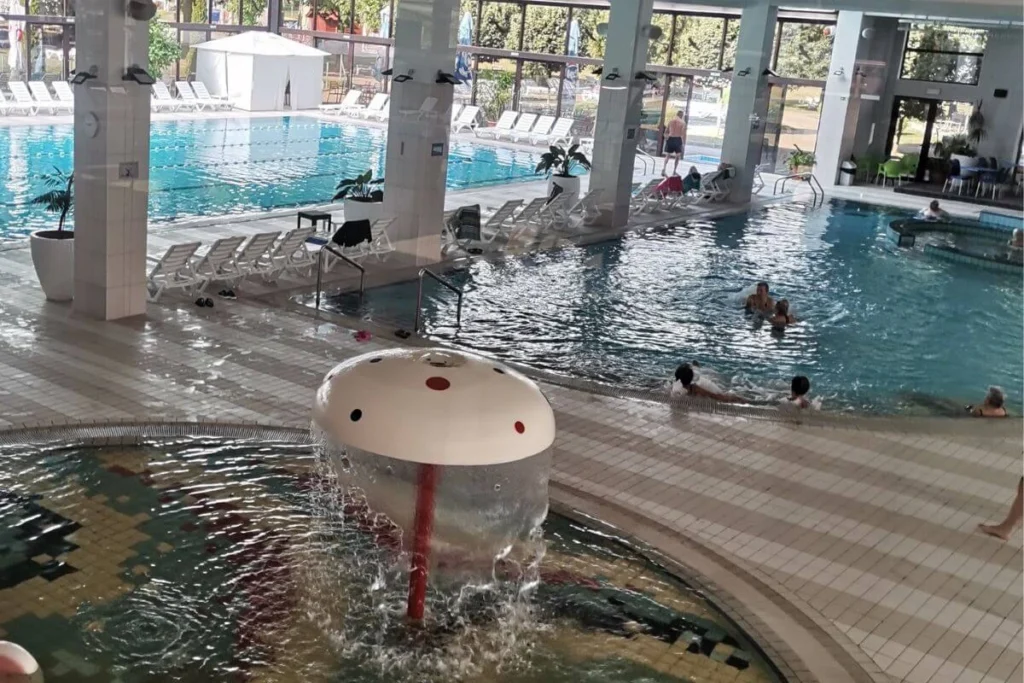
North of Zagreb, the rolling hills of Hrvatsko Zagorje feel like a fairy tale if you are arriving from somewhere flat. Medieval castles sit on hilltops, the landscape is green, and the region has a strong tradition of thermal spas. Terme Tuhelj, Jezerčica or Krapinske toplice have particularly good children’s pool complexes; waterslides, a lazy river, and shallow areas for very young children and makes for an excellent full-day family trip from the capital.
Exploring Eastern Croatia: Family Travel in Slavonia and Baranja
Before we head toward the coast, I want to talk about Slavonia; the part of Croatia that most international visitors never see. Not because they are wrong to focus on the coast, but because they are missing something that has no equivalent anywhere else in the country.
Slavonia is flat, fertile river country in eastern Croatia, bordering Hungary, Bosnia and Herzegovina and Serbia. Its food, music, and agricultural traditions reflect centuries of layered cultural influence, and the hospitality here has a warmth and openness that is different from what you find in the tourist-heavy coastal towns.
The smoked meats alone; ham, sausages, and kulen, a spiced cured sausage that is genuinely one of the best things you will eat in Croatia are worth visiting. The music is tambura music, played on plucked string instruments, and on a warm evening with people eating and drinking together it creates an atmosphere I find almost impossible to describe and very easy to fall in love with.
Osijek: Flat, Green, and Easy with Kids
Osijek is Slavonia’s largest city, and one of the most relaxed places for family travel in the whole country. It’s flat, green and it has a tram network along with Zagreb.
Interesting fact is that Osijek actually had the first tram in Croatia. Tram network is useful for getting around with kids.
In summer, locals head to Kopika (sweet and shortened word for Copacabana), the beloved riverside beach complex on the Drava river, with pools, sandy areas, and the local-holiday atmosphere.
Kopački Rit Nature Park: Season Matters Enormously Here
Just north of Osijek, Kopački Rit is one of the largest wetland nature parks in Europe. Wooden boardwalks over still, dark water, extraordinary birdlife, a genuine sense of wilderness that is rare this close to a city. It is a remarkable place.
Summer months warning
It’s a wetland, and the mosquitoes in July and August are relentless and can end your visit within an hour. Any other season is perfect. If you can’t avoid a summer visit, cover your children in long sleeves and use the strongest repellent you can find.
Getting to the Coast: Highway A1 vs. The Old Road
A Decision That Matters More Than You Think
About 20 years ago, Croatia completed the A1 highway connecting Zagreb to Split. From what used to be a slow crawl through mountain roads became a fast, direct connection. The highway cuts through Lika via tunnels, and on it you can drive from Zagreb to the Dalmatian coast without any of the scenery getting in the way.
If your only goal is to reach the sea as quickly as possible, the A1 is your road. But if you’re heading to Lika or Gorski Kotar, or if you simply want to see more of the country, I would strongly encourage you to consider the old municipal road (D1), at least from the Karlovac or Bosiljevo exit.
Here is what you lose when you take the highway: the entire pre-highway tourism infrastructure that once lined these roads. Hotels, restaurants, little roadside cafes that sustained themselves on the flow of tourists heading to the sea.
When the A1 opened, that flow redirected almost overnight. Some of those places survived and adapted. Some didn’t. You’ll see both: the charming, slightly worn roadside restaurant that still makes the best roast lamb, and the buildings with overgrown grass that was once someone’s business.
More practically, the old road gives you freedom. And when you are traveling with small children, freedom matters enormously.
I will tell you what I mean from personal experience. I once drove the A1 with my youngest when she was about three months old. She started crying somewhere past Karlovac and the next rest stop was 20 minutes away. Twenty minutes is nothing in normal life. On a highway with a screaming baby and no place to safely pull over on, it felt like an eternity.
On the old road, you can stop whenever you need to, a parking spot, a village square, a restaurant you were not planning on. That flexibility is great when you have young children in the car.
A few honest facts about the old road, though:
- It is curvier. If your child has car sickness, decide in advance whether they need medication before you hit the winding parts.
- Speed limits is around 80 km/h versus 130 on the highway, so add time to your journey accordingly.
- During high season (July and August), this road gets busy. Go early if you can.
Our approach is usually a combination. If we are heading straight to a beach destination with no stops planned, we take the highway for the easy stretches and exit onto local roads once we are in the area we want to explore. Both roads have their place.
The Green Heart: Visiting Lika and Gorski Kotar with Children
Most visitors to Croatia pass through Lika and Gorski Kotar on their way to the coast without stopping. This mountainous middle ground between the continental interior and the Adriatic has some of the best outdoor experiences in the country. Many of them are excellent with children.
Plitvice Lakes National Park
Yes, everyone goes here. It’s crowded in summer and it’s as beautiful as you have heard. Sixteen terraced lakes connected by waterfalls, the water so clear and so turquoise that it looks like a postcard. It’s beautiful in every season, and I’m very lucky to live here and being able to visit them in different seasons. The waterfalls freeze in winter, autumn turns the surrounding forest gold, and spring brings the highest water levels and most dramatic falls.
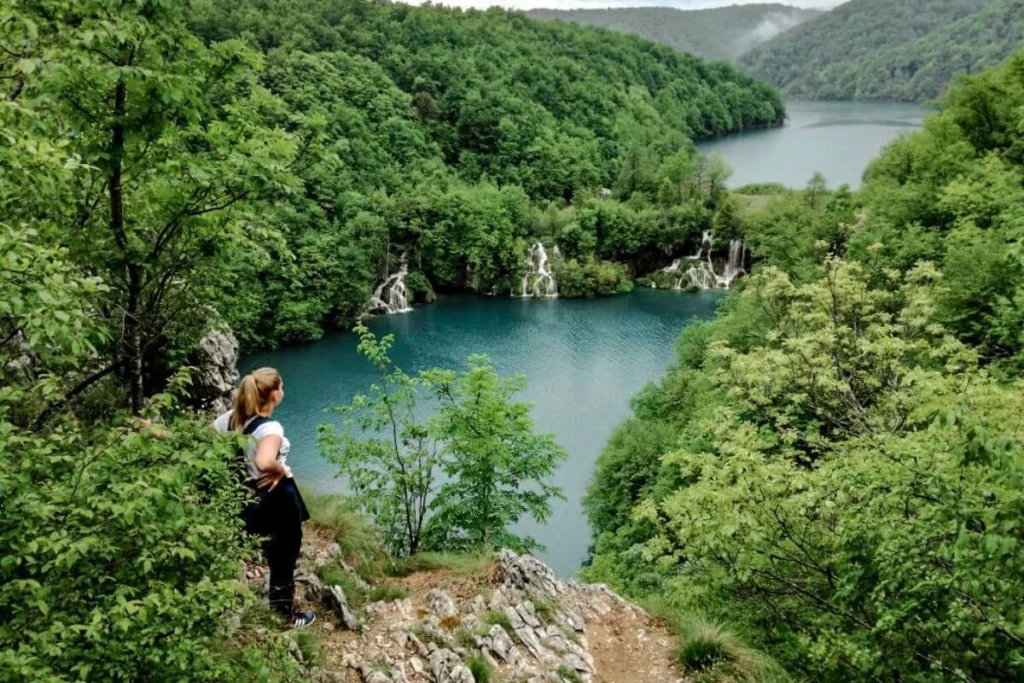
What you must know before you go: Plitvice is not stroller-friendly. The paths are narrow wooden boardwalks built directly over the water, with steps, tight turns, and no railings in many sections.
Leave the stroller in the car and bring a carrier if possible. I have seen parents struggling with stroller and eventually giving up. Plan for the carrier from the start and save yourself that stress.
Rastoke (Slunj); Plitvice’s Quieter Cousin
Just off the road near Slunj, Rastoke is sometimes called the small falls of Plitvice, which is accurate in the best possible way. Old watermills and stone houses sit directly on the Korana river, with water rushing around and under everything. It’s compact, charming, and you don’t have to plan it months in advance. If you are driving through with children and need a stop that will actually hold their attention, Rastoke is a very good answer.
Kuterevo Bear Sanctuary
A sanctuary for rescued brown bears in a small village in Lika. What to expect here: this is a slow visit, and it does not feel well-organised in the way a zoo or mainstream visitor attraction does.
There is a relaxed, slightly hippie quality to it; colorful hand-painted signs and people who clearly love what they are doing. Kids will love seeing the bears, and there is a good feeling about the place that exists because people cared enough to rescue animals rather than profit from them. Go expecting something real rather than something polished.
Hiking: Northern Velebit and the Gacka River
If your family hikes, this region has some of the best trails in Croatia. The Premužić Trail on Northern Velebit National Park is famous for being unusually accessible for a mountain path. It follows roughly the ridgeline, so you are not constantly climbing and descending. The views are extraordinary.
Be aware: relatively easy is still relative. Northern Velebit is a wild mountain environment, and preparation is essential at any time, especially with children. Research the conditions thoroughly, bring proper gear, and check the weather before you go.
For something more relaxed, the Gacka River is one of the most beautiful spots in Lika for a summer day and one of the best places in Croatia for canoeing. The water is clear, cold, and calm in many sections, manageable even with children who are comfortable on the water.
Lake Bajer (Fužine): The Family Walk
Fužine is a small town in Gorski Kotar, and Lake Bajer just outside it is one of my favourite easy days out in this entire region. The full circle around the lake takes about an hour on foot, and crucially it is flat, which in this hilly part of the country is worth noting. Along the way there are spots to stop on pebble shores and throw stones into the water (a reliably beloved toddler activity), a playground, a cafe, and an outdoor gym. In Fužine itself, there is a hotel Bitoraj known for serving a traditional Croatian blueberry pie that I will not describe further except to say: order it.
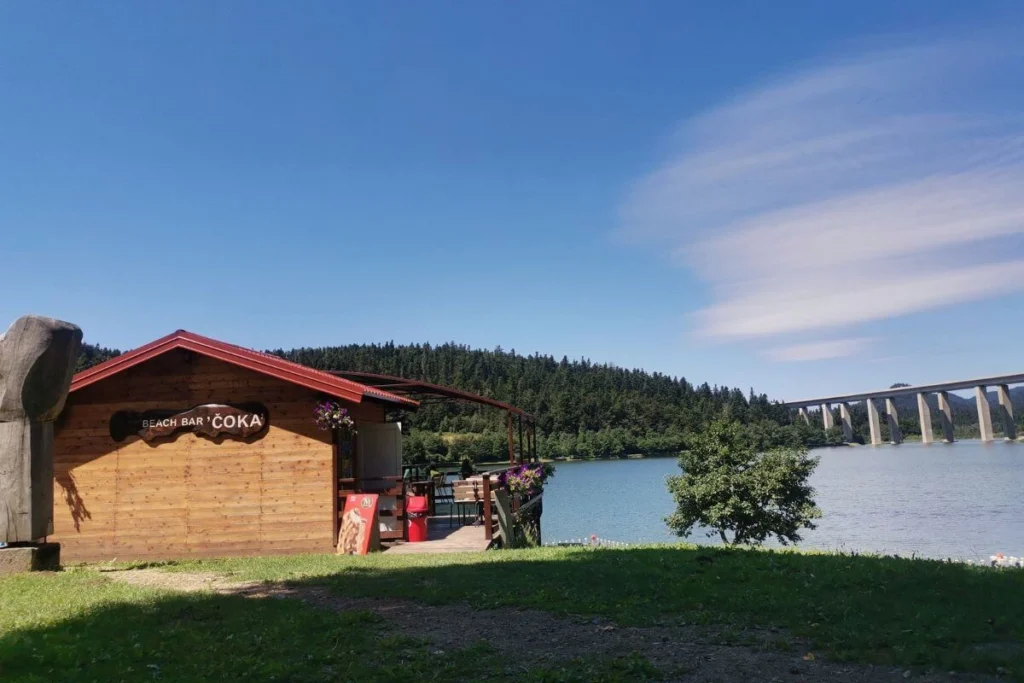
The lake is suitable for swimming in summer, which makes it a practical option if you are staying in Gorski Kotar and want water without the drive to the coast. That drive, by the way, takes about 35 minutes and brings you to Kraljevica, a camp near Rijeka with good beach access. The combination of mountain mornings and coastal afternoons is one of those quietly perfect travel patterns that not enough visitors to this region know about.
Rijeka and Kvarner Bay
Rijeka is the largest city in the Kvarner region and an important ferry base.
Interesting fact about Rijeka: because of the way continental mountain air meets the coastal climate, Rijeka statistically has more rainy days per year than London.
In summer this matters less. It is warm and mostly dry. But for off-season visits, pack a rain jacket regardless of the forecast. The city is a natural launch point for island exploration, and with that 35-minute drive I mentioned, it connects Gorski Kotar to the coast in a way that makes combining both regions genuinely practical.
Kvarner Islands: Krk, Cres, Lošinj, and Rab
Krk is the most accessible of the Kvarner islands. There is a bridge from the mainland, which is convenient, though during peak season that bridge becomes very crowdy. If you are arriving or departing on a summer weekend, factor in extra time.
Krk is also a gateway to the other islands in the group:
Ferries connect to Cres, and from there you can continue south to Mali and Veli Lošinj.
Mali (means small) Lošinj is actually bigger than Veli (menas big) Lošinj and deserves its own mention here.
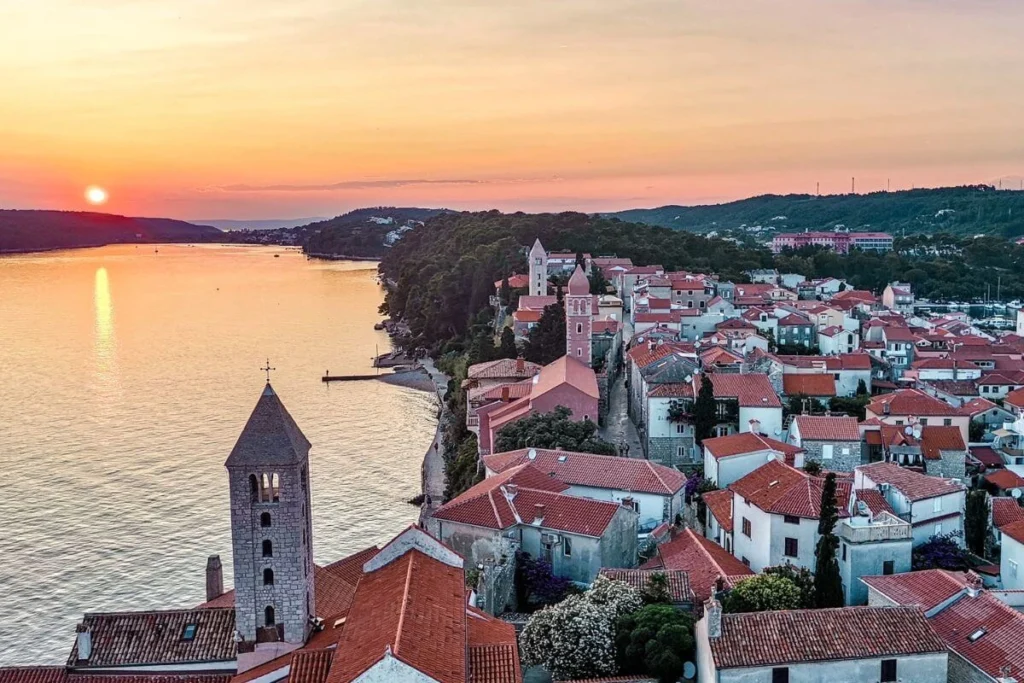
In the late 19th century, an Austrian botanist planted hundreds of different trees and aromatic plants across the island. Over the century and more that followed, that decision produced a genuinely unique microclimate. Combined with the salt air from the Adriatic, the air on Lošinj is considered among the healthiest in Croatia, and Croatian doctors actually recommend it for patients with asthma and respiratory problems. If you or your child has breathing difficulties, this is not a marketing claim. It is real, it is documented, and it is worth planning around.
Istria: Roman History and National Park
Istria is the large triangular peninsula at Croatia’s northern tip, and it rewards you more the longer you spend there.
On the surface it looks like the rest of the Adriatic coast; blue water, stone towns, olive trees. But Istria has its own particular texture, shaped by centuries of Venetian rule, a mixed Croatian-Italian cultural identity, and an interior that feels almost Tuscan in the best moments.
Entering Istria from the north, you cross the Učka mountain, which forms a natural border between the peninsula and the Kvarner bay. Učka itself is worth a stop. It is an excellent hiking destination with stunning views across the peninsula on clear days, and a good option if you want mountain activity without committing to the more demanding terrain of Velebit or Gorski Kotar.
Pula
The largest city in Istria sits at the southern tip of the peninsula and contains one of the best-preserved Roman amphitheatres in the world. This is a place where children can literally run around inside a 2,000-year-old arena, and that never quite loses its strangeness regardless of how many times you have explained who the Romans were.
The surrounding neighborhoods, particularly Verudela and the Veruda have excellent swimming spots and a local, unhurried feel that is a relief after the busier parts of the old town.
Brijuni National Park- One of Croatia’s Most Genuinely Family-Friendly Destinations
Just across the water from Pula lies the Brijuni archipelago, a national park and one of the most enjoyable places in Croatia to visit with children of any age.
The main island has a safari park where zebras, deer, and a resident elephant roam semi-freely. You reach the island by boat from Fažana, and once there you get around by electric golf cart, bicycle with child seats available, or the park’s small tourist train.
It is fully stroller-friendly. One of the very few truly stroller-friendly national parks in Croatia with wide, flat paths throughout. There is also history woven through everything: Tito, Yugoslavia’s longtime leader, used Brijuni as his personal retreat for decades, and you can actually rent his car for a drive around the island.
The Interior of Istria
Do not spend your entire time in Istria on the coast. The interior around Motovun and Buzet with hilltop medieval towns, vineyard valleys, and a pace that the crowded coastal towns in July simply cannot match.
Motovun is worth a morning: a walled town on a hill approached by a long walk through the oak forest, with views across the valley that justify the climb. For families who need a guaranteed full day of activity, the aqua parks in the Istrian interior are a reliable option when beach fatigue sets in.
Dalmatia: The Croatia You Imagined Before You Knew the Name of the Country
When most people first see a photo of Croatia, the postcard image, the one that makes you start searching for flights , they are looking at Dalmatia. Blue water so clear you can see the bottom from a boat.
White stone cities with terracotta rooftops that have been standing since the Middle Ages. A particular quality of afternoon light that turns everything slightly golden. I have lived here my whole life and these scenes still stop me sometimes. I still feel lucky to be looking at them every summer.
Dalmatia runs the length of Croatia’s central and southern coast, and we typically divide it into North Dalmatia (centered around Zadar and Šibenik), Middle Dalmatia (Split and the surroundingislands), and South Dalmatia (the Pelješac peninsula, Korčula, and Dubrovnik). Each part has its own character, and each is worth knowing separately.
North Dalmatia
Zadar: Stroller-Friendly, and Full of Surprises
Zadar is one of my favourite cities in Croatia for families, and it is consistently underestimated by visitors who pass through on their way to Split or Dubrovnik. The old town peninsula is largely flat and genuinely navigable with a stroller.
There are good parks and playgrounds within easy reach of the center, and it has two of the most unusual things in the country.
The Sea Organ is a set of marble steps descending into the sea along the western waterfront, with organ pipes built into the structure beneath them. Waves push air through the pipes and the city literally plays music continuous, unpredictable, sometimes haunting, sometimes beautiful.
The Sun Salutation next to it is a solar-powered installation that lights up in shifting colours after dark. Together at sunset they create an unhurried, natural spectacle that the city essentially gives away for free. Children are captivated by both. So are adults.
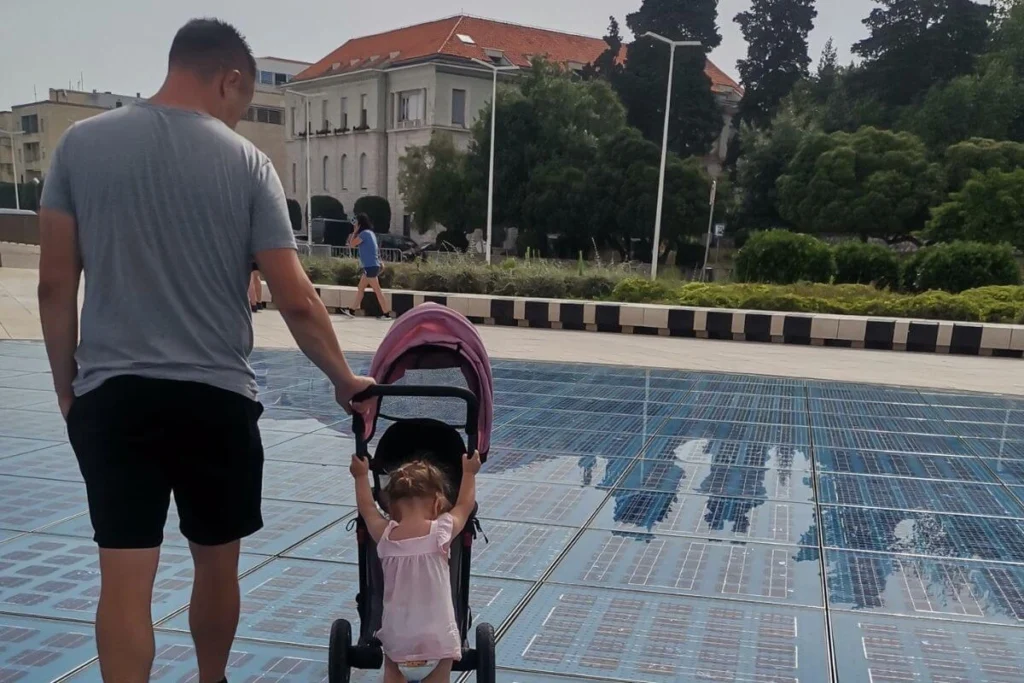
From Zadar you can reach a number of excellent islands; Ugljan, Pašman and Dugi otok.
Kornati National Park is one of the most extraordinary landscapes in the Mediterranean: 89 mostly uninhabited islands rising from the sea in formations that look almost designed. It is not a destination with much for very young children to do on land, but as a full day out on a boat, it is unlike anything else.
Nin: Salt Flats, Shallow Water, and a Cowboy Village
About 15 kilometers north of Zadar, Nin is a tiny island town connected to the mainland by two small bridges and surrounded by some of the shallowest, seawater on the Croatian coast. It is ideal if you are traveling with very young children precisely because the water is so shallow and calm.
You can wade out a long way without it reaching your waist. The beach here is also sandy rather than the pebble and rock you encounter most of the coast, which matters a great deal if you have a crawling baby or a toddler who wants to dig.
Nin also has a salt production facility that has been operating since Roman times, and nearby there is a cowboy village, a working horse ranch with Western-style activities that children find more exciting than most ancient monuments. It is one of those unexpected combinations that makes Croatia interesting: Roman history and horseback riding in the same afternoon.
Šibenik and the Kornati Islands
Šibenik is the second-largest city in North Dalmatia. It has a UNESCO-listed cathedral built entirely from stone. No mortar, the blocks cut so precisely they hold each other in place and city walls that give views across the surrounding islands.
The old town climbs from the waterfront and is more manageable than Dubrovnik, which I will get to shortly. Šibenik sits near the island of Murter, your main gateway to Kornati National Park. A boat trip through the Kornati is a day I would put on any family itinerary as long as your children are old enough to appreciate being on the water.
Middle Dalmatia
Split: Magnificent, Loud, and Worth One Day
Split is the unofficial capital of Dalmatia and one of the most alive cities I have spent time in. Diocletian’s Palace, a Roman emperor’s retirement home that gradually became the city itself, with restaurants, apartments and bars filling the spaces between 1,700-year-old walls truly remarkable.
But for a quiet family holiday, I would not stay in the center. Split in high season is loud, crowded, and hot in a exhausting way with young children. Some roads are not built for strollers, the noise continues late into the night, and the city moves at a pace that does not accommodate nap schedules. Stay outside the center and come in for the day. One full day in Split is enough to see what it has to offer.
Marjan Hill, the forested park that rises above Split’s western neighborhoods, is beautiful and worth a visit.
One specific warning:
If you want to walk it, go early. By midday some the paths are exposed and the temperature becomes too hot, especially for children.
South Dalmatia
The Pelješac Peninsula: Wine, Hidden Beaches, and the Bridge That Changed Everything
The main town of the peninsula is Orebić, a pleasant unhurried place with a long waterfront and views across a narrow channel to the island of Korčula.
Pelješac is wine country, specifically, it is where Dingač and Postup are produced, two of Croatia’s most celebrated red wines made from the Plavac Mali grape.
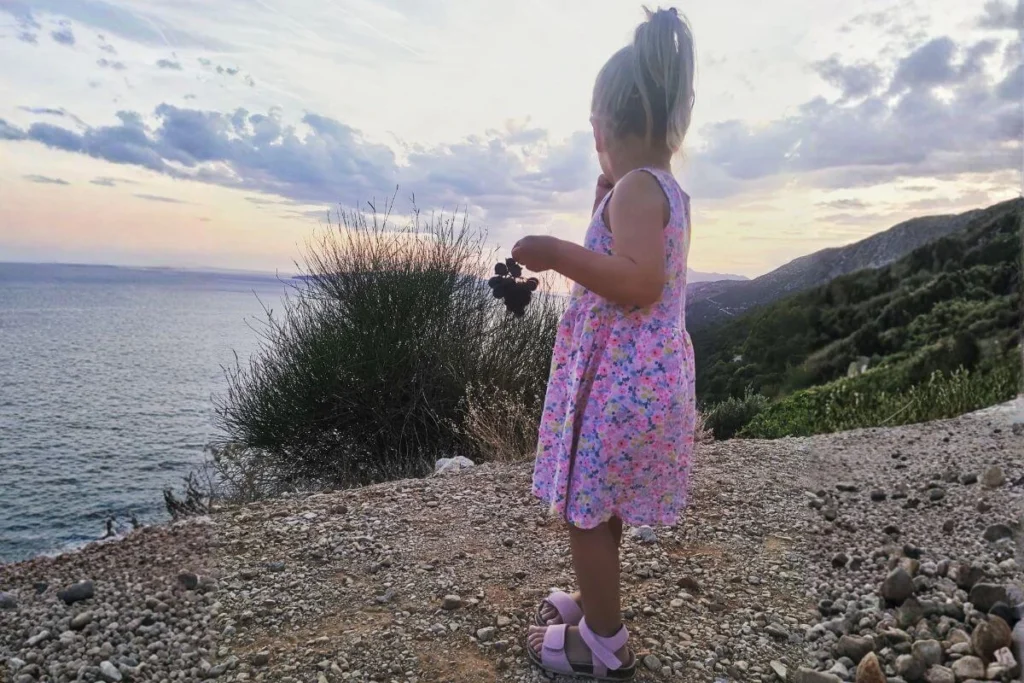
A winery visit with tasting is worth your time if your children are old enough to occupy themselves for an hour. The vineyards are beautiful.
Divna Bay, on the southern shore of the peninsula, looks like it was relocated from somewhere tropical a protected cove with clear water and very little development.
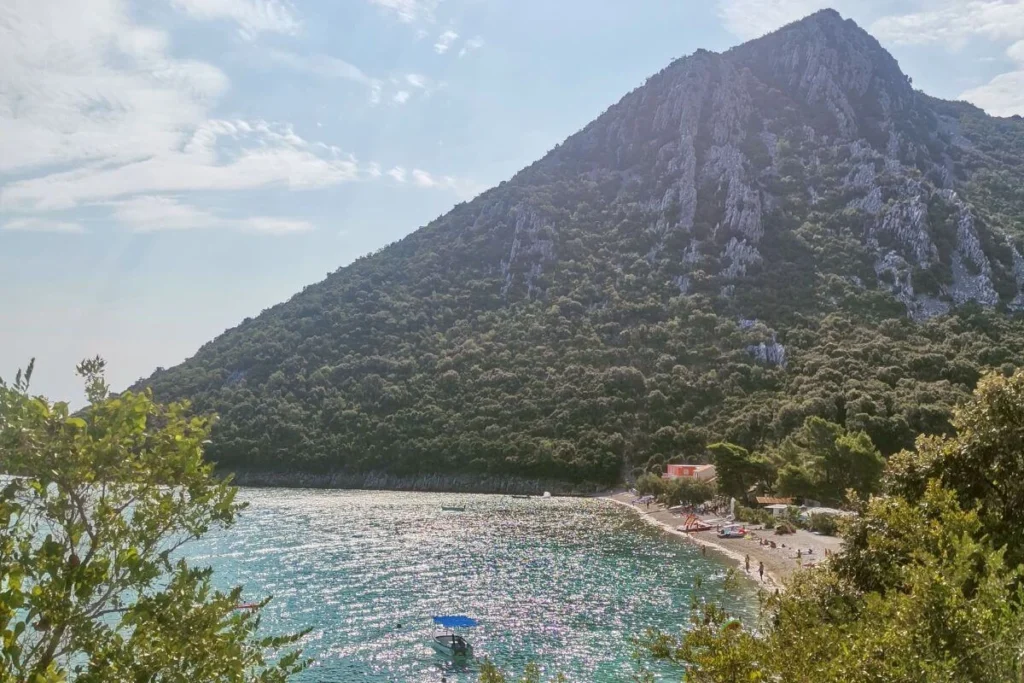
Getting to Pelješac has become much easier since 2022, when the Pelješac Bridge opened. Before the bridge, traveling south from Split to Dubrovnik required either a long detour inland through Bosnia, or crossing the border the Bosnian corridor at Neum. The bridge eliminates both problems.
Korčula Island
Across the narrow Pelješac channel lies Korčula; a forested island with a medieval walled town at its tip that is sometimes called Little Dubrovnik. It is quieter and, in my view, more charming. The island has a good number of hidden beaches, small bays accessible by car or short path, and the kind of relaxed pace that makes it excellent for families who want to slow down.
One practical note: if you want to explore Korčula beyond the main town, having a car on the island makes a significant difference. The beaches worth finding are spread around and not always within walking distance.
Dubrovnik: Stunning, Crowded, and Best Experienced with a Plan
I do not need to sell you on Dubrovnik. If you are planning a trip to Croatia, you almost certainly already have it on your list, and the pictures that convinced you do not exaggerate.
The old town, enclosed by its medieval walls and sitting directly above the sea, is one of the most extraordinary urban landscapes in Europe.
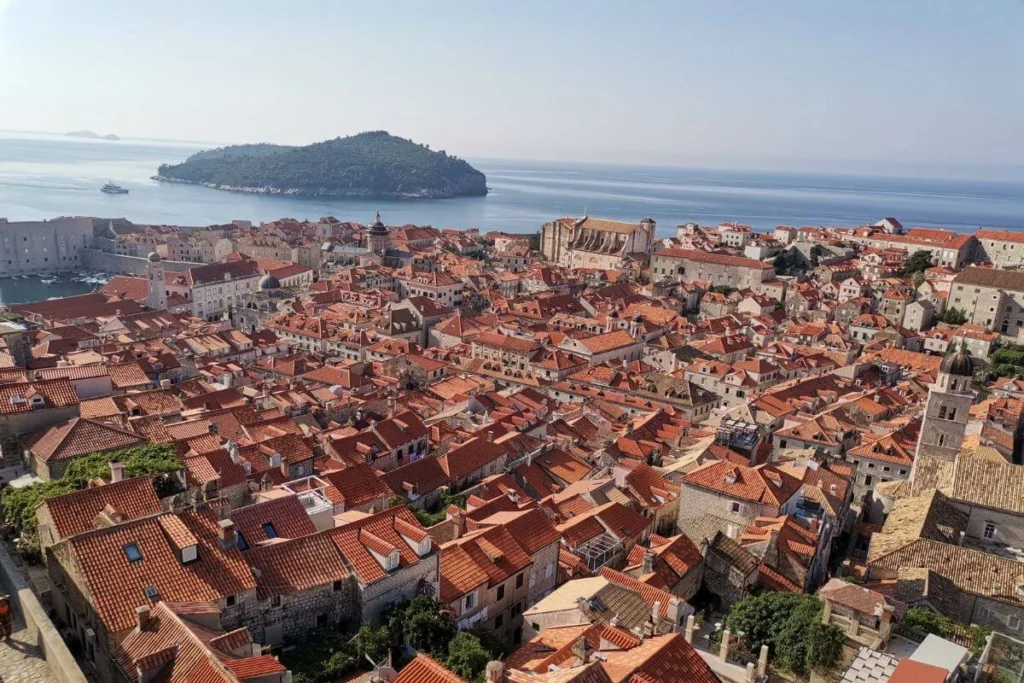
What the pictures do not show is the stairs. Dubrovnik is built on steep limestone, and outside Stradun (the main street, which is flat), getting anywhere involves climbing. The city walls themselves are extraordinary but entirely inaccessible with a stroller. For families with babies or toddlers, a carrier is not optional here, it is the only way you will actually see the city.
The other thing the pictures do not show is the volume of people in high season. Dubrovnik is one of the most visited cities in Europe relative to its size. In July and August, the old town feels overwhelming. If you can visit in May, June, or September, the experience is different.
Lokrum Island
A ten-minute boat ride from Dubrovnik’s old port sits Lokrum, an island that is the best escape from the city’s crowds. You can see peacocks and rabbits roam freely. There is a saltwater lake connected to the sea, a ruined Benedictine monastery, and enough shade to spend an afternoon outdoors in July or August.
A few tour operators will try to sell you boat trips to Lokrum, but there is a regular local boat service from the city port.
For 2026 the prices are: 30 EUR per adult, 5 EUR for children aged 7 to 18, and free for children under 7. Take the local boat, arrive on the first ferry of the day, and you will have the island almost to yourself for the first couple of hours.
Final Thoughts: Take Your Time
The best piece of advice I can give you for Croatia (or honestly any trip with children) don’t try to cover everything. The goal is not a completed checklist. The goal is a trip your family actually enjoyed, where you were not rushing from place to place and where your children come home with specific, real memories instead of a blur of beautiful things you moved through too quickly.
Croatia is ready for your family. It’s safe, very welcoming to children, and it has enough variety that you could come back five times and see something completely different each trip.
Some families come for the coast and never leave it. Some come for the national parks and barely see the sea. Others find that a week in one small area, one island, one city, one valley, gives them more than they imagined.
Figure out what kind of trip your family needs. Then find the part of Croatia that fits. The rest will take care of itself.
Happy travels. I hope to see you here.